
Sustainability Report
2026
Message from Angi Rivera,
Director of Sustainability
The past couple of years have been a time of persistence, progress, and celebration for both Sellen and sustainability. While regulations have been pulled back on multiple fronts, sustainability progress in the construction industry has not stalled. In fact, it has weathered the evolving political landscape surprisingly well, with ongoing changes to certifications, new state and local legislation, and significant boots-on-the-ground efforts.
As a company with over 80 years of experience in the Puget Sound region, Sellen understands the importance of perseverance. Our environment is an asset to be protected, and sustainability is a core tenet of building a future that can be enjoyed for generations. We recognized that we needed a structure, similar to what has long been in place and enforced for the safety and quality aspects of construction, to promote accountability and clarity for sustainability and to facilitate execution. The Contractor’s Commitment and Climate Pledge have provided that structure. We continue to align our operations with these and increase transparency and accountability.
No company is truly carbon neutral or fully regenerative. Sustainability isn’t about being perfect – it’s about making incremental but deliberate choices that add up over time, a continued commitment to progressive improvement. What is important is that we recognize our impact and take action to reduce the footprints we leave.
Angi Rivera,
Director of Sustainability
Sellen’s Purpose
Sellen’s purpose is to improve the lives of those around us – as builders, partners, and neighbors.
Sustainability at Sellen
Sellen is committed to the long-term health of our community and the global ecosystem within which we exist. As a leader in sustainable construction practices, we work diligently to minimize our environmental impact and build spaces that not only preserve but regenerate our region’s natural beauty for future generations.
Executive Summary
Sellen’s 2026 Sustainability Report reflects steady progress amid a competitive market and shifting political landscape:
Contractor’s Commitment:
Sellen improved or maintained its score across all five pillars—carbon, wellness, waste, water, and materials—in both 2024 and 2025.

Emissions Inventory & Decarbonization Progress
Total emissions declined from 11,207 to 8,750 MTCO₂e year-over-year, though carbon intensity held relatively steady at approximately 20 kgCO₂e per $1,000 of revenue, reflecting a softer market rather than operational improvement. Waste remains our largest single emissions source, reinforcing our focus on diversion and circularity. Corporate operational emissions also declined, with our Main Office continuing to outperform Seattle’s building performance standards.
Industry Updates:
Beyond our projects, Sellen remains active in shaping the industry’s future—engaging directly in the development of LEED v5, Contractor’s Commitment v3, and regional waste-reduction initiatives that are defining sustainable market drivers and expectations for construction.
01: Progress Summary
Contractor’s Commitment

Contractor’s Commitment
Sellen joined the Contractor’s Commitment in 2019 and participated in the program’s pilot reporting year in 2021. The Contractor’s Commitment provides a framework for builders to measure sustainability performance across five categories: carbon, wellness, waste, water, and materials. Each year, Sellen compiles both our corporate and project data to stack up against the program’s standards, which are updated biannually to encourage continuous improvement from all participants.
SCORE CARD
Sellen improved or maintained its score in all five areas in 2024 and 2025, compared to 2023:
| Category | 2023 | 2024 | 2025 |
|---|---|---|---|
| Carbon | Good | Best ↑ | Best |
| Wellness | Reported | Reported | Reported |
| Waste | Better | Better | Best ↑ |
| Materials | Best | Best | Best |
| Water | Reported | Reported | Good ↑ |


Salmon-Safe Reaccreditation in 2025
Sellen first received Salmon-Safe Accreditation in 2017, marking our commitment to protecting bodies of water throughout the Puget Sound region. We implement Salmon-Safe procedures on all our jobsites and continuously monitor our performance to protect our regional ecosystem.
Project Highlights
Elliott Bay Connections
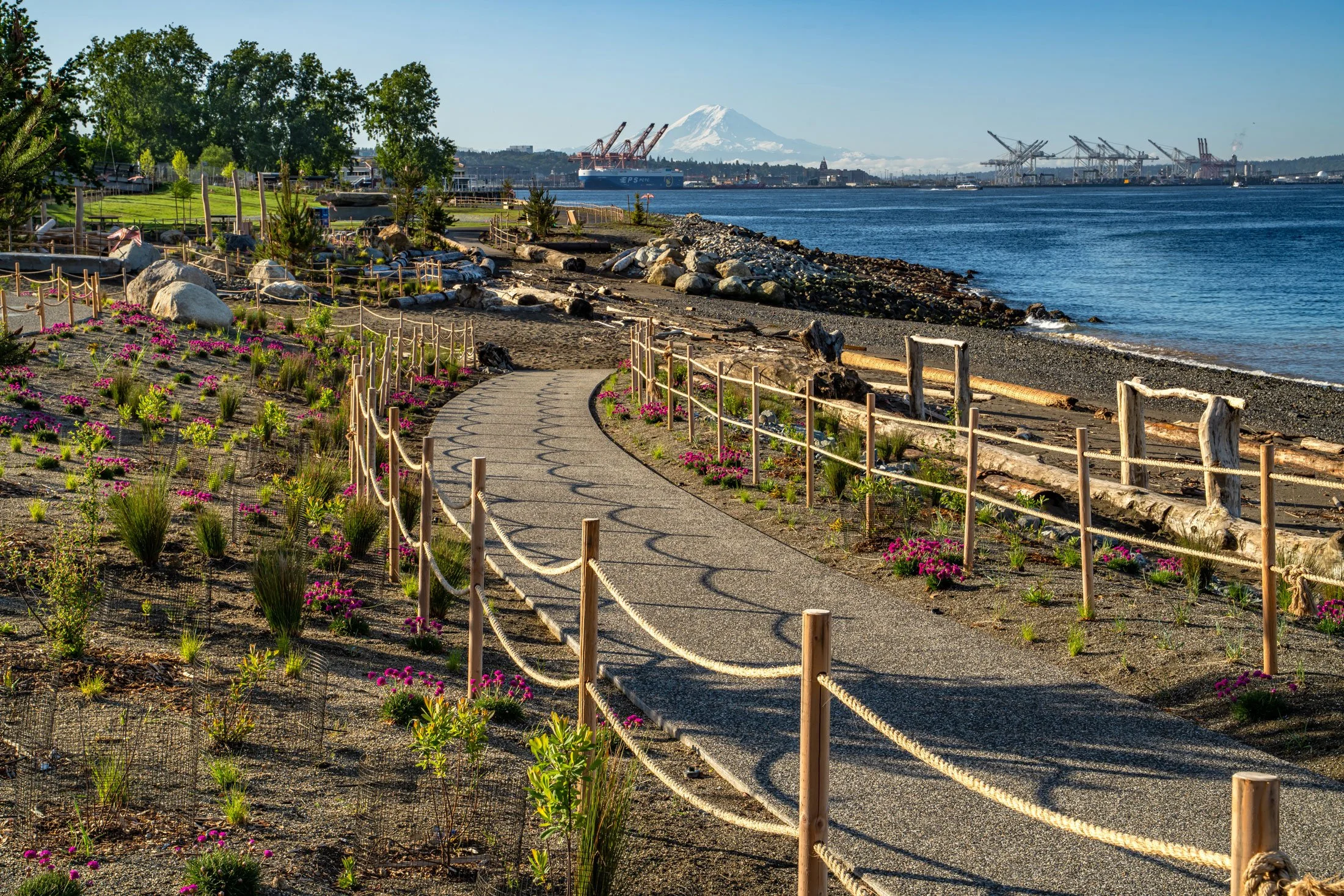
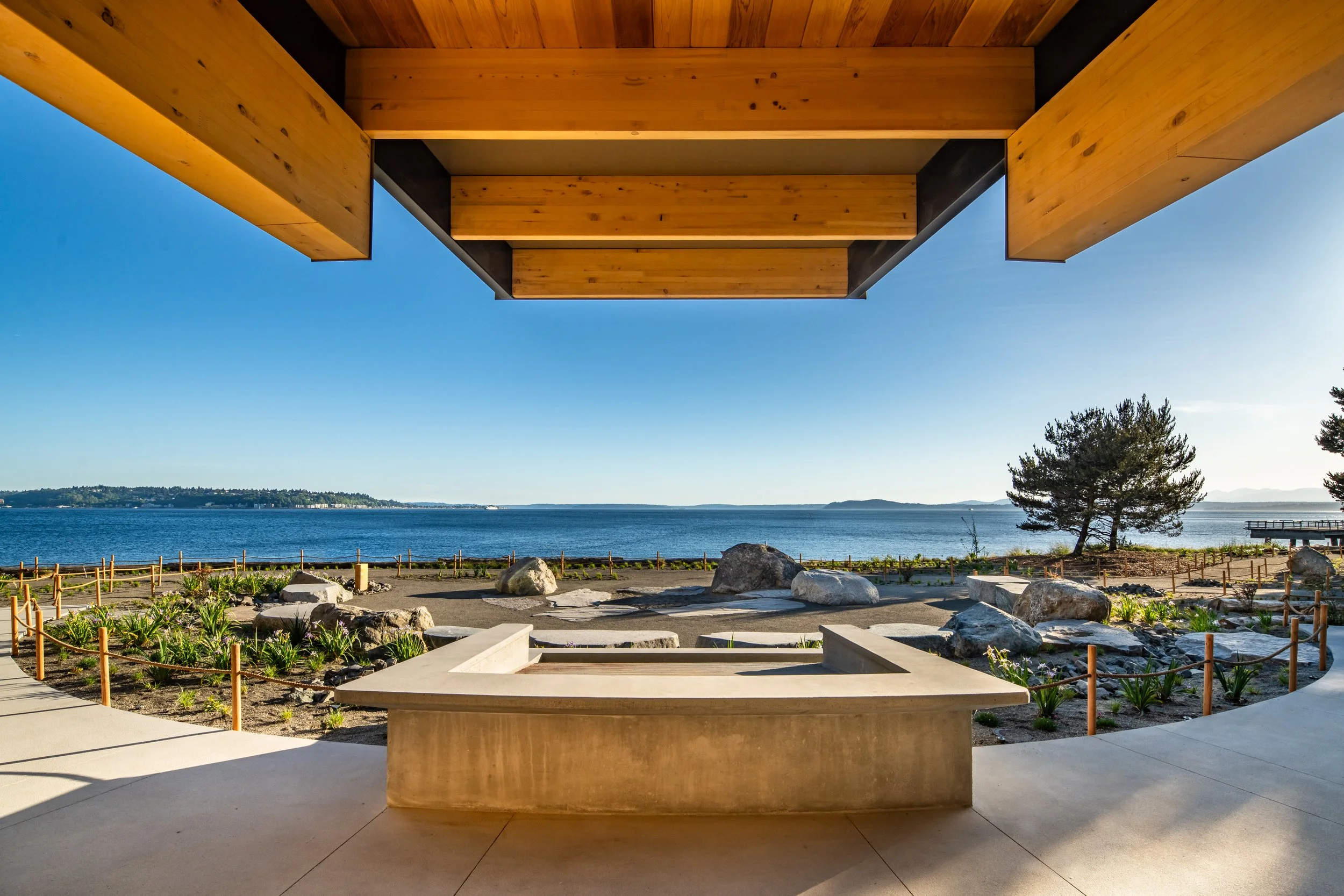
Elliott Bay Connections is a public-private partnership to connect, restore, and revitalize the Elliott Bay waterfront. The 847,000 SF project set a high bar for environmental stewardship, weaving sustainability and resiliency into every aspect of design and construction.
Key Stats
- Salmon-Safe certified
- Rigorous construction management to protect Elliott Bay ecosystem
- Beach restoration operated within a 45-day in-water work window dictated by Washington Department of Fish & Wildlife
- Project is currently achieving over 90% waste diversion
- 74,000 native plants and 282 new trees planted
- Sustainably harvested regional wood used in amenity building construction
Memorial Stadium Site Concrete Processing
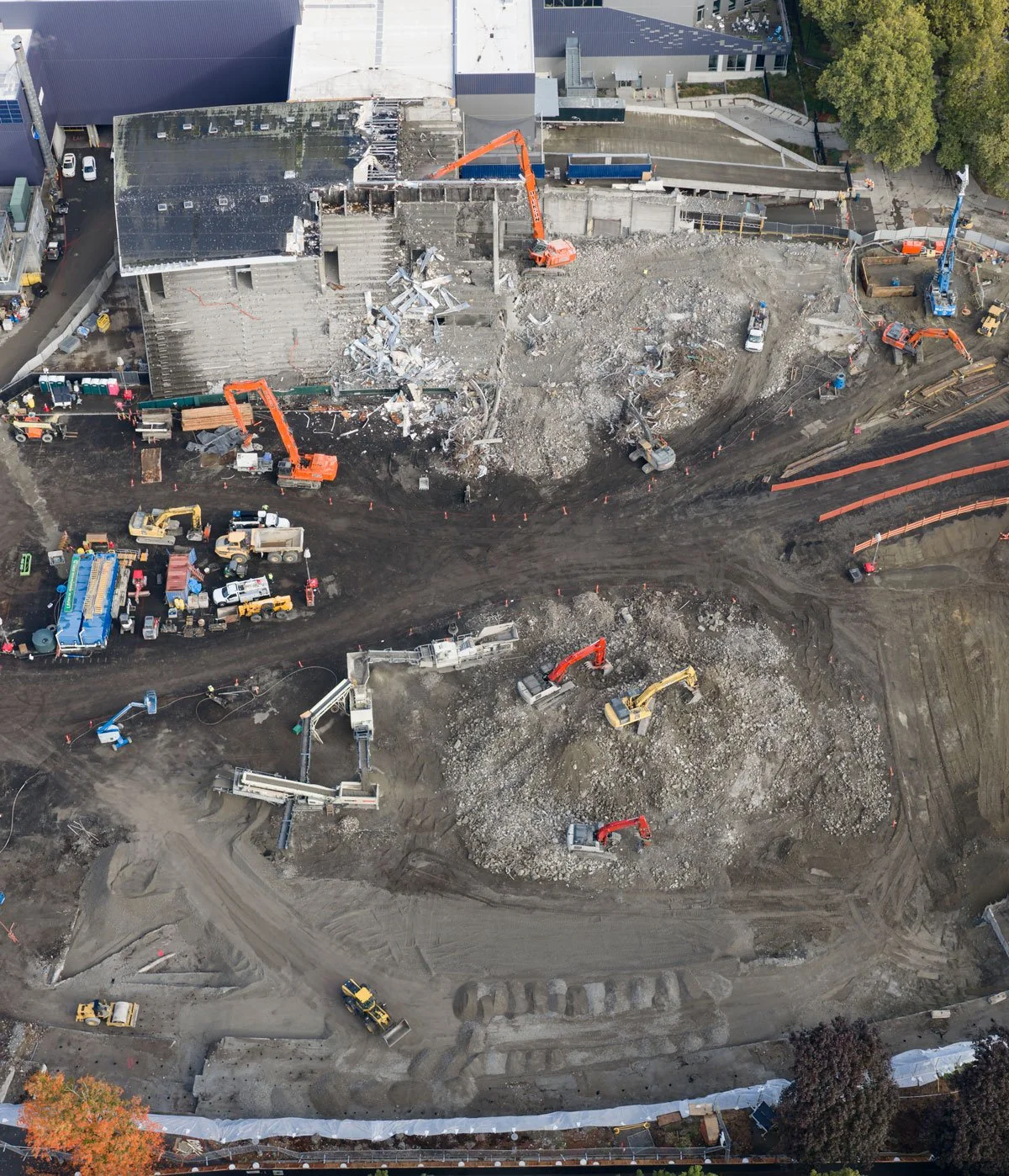
The reconstruction of Seattle Public Schools' 1947-era stadium at Seattle Center, Memorial Stadium, will create a state-of-the-art multi-purpose stadium for student athletics, education, arts, culture, entertainment, and community events while preserving a physical link to the stadium's legacy. This is the first time Sellen has had the site footprint to process demolished concrete in place using an onsite concrete crushing and processing operation rather than importing backfill. Additional tree preservation and broader material salvage and reuse efforts were also implemented across the project.
Key Stats
- $780,000 savings through reuse
- ~400 avoided dump truck trips
CornerStone
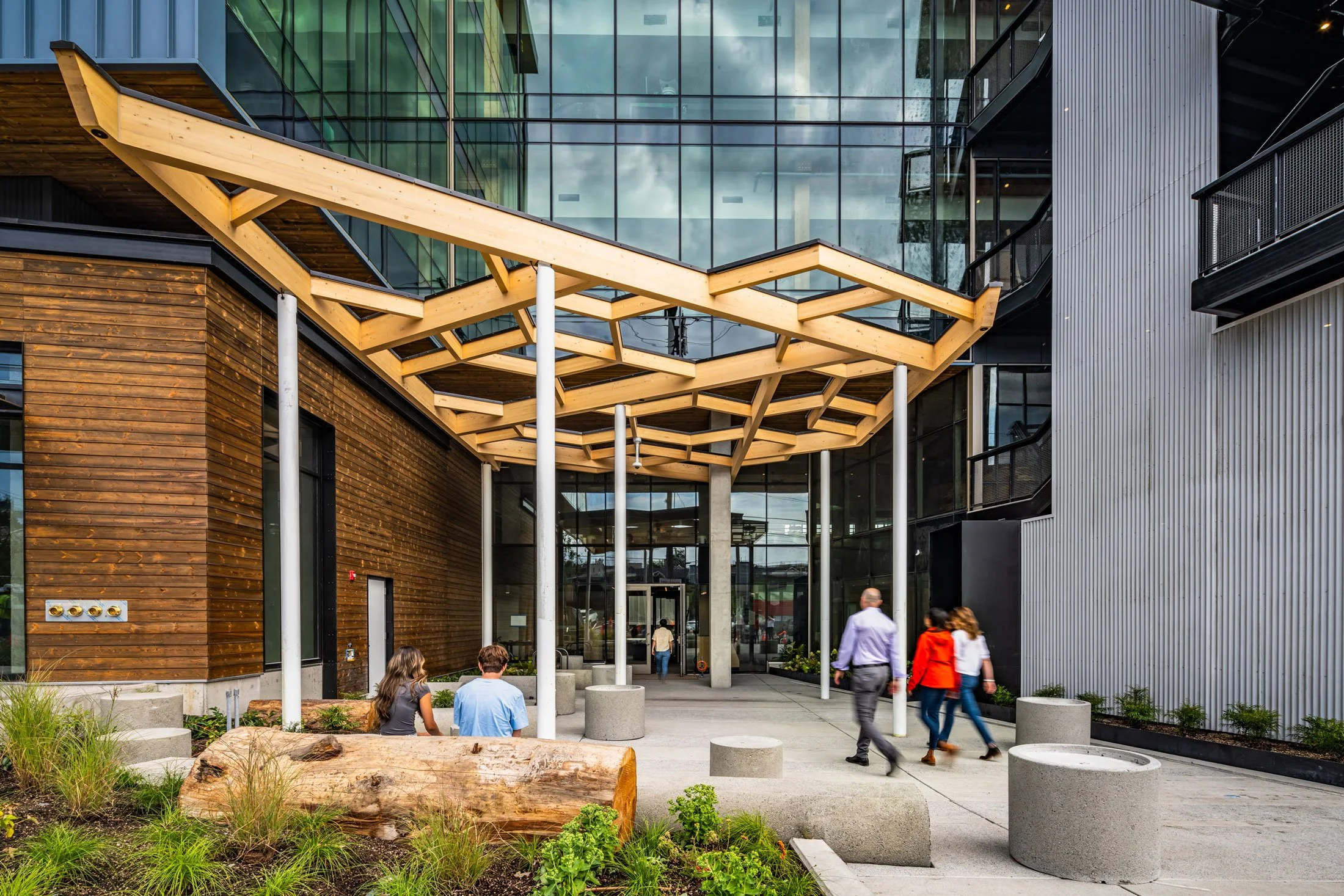
CornerStone achieved Living Building Challenge (LBC) Petal certification in 2025. Sellen carefully tracked materials for both the shell & core and tenant improvement scopes, documenting Red List compliance with ingredients disclosures to 100 parts per million for over 90% of 1,300+ products.
Key Stat
- 1,886 metric tons of embodied CO₂ emissions saved with hybrid mass timber and concrete structure — a 35% reduction compared to a typical concrete and steel structure
Awards
- 2026 Seattle 2030 District Vision Award – Water
- 2025 CREDA Washington State Night of the Stars – Office Interior of the Year
02: Emissions Inventory & Decarbonization Progress
Net Zero Carbon By 2040: Our Approach
Founded in 2019 by Amazon and Global Optimism, The Climate Pledge unites companies across sectors around a shared goal: reaching net zero carbon emissions by 2040. Signatories commit to regular emissions reporting, implementing decarbonization measures, and neutralizing any remaining emissions through credible offsets after all other reduction efforts have been exhausted. In 2024, Sellen became a signatory, formalizing our commitment to this ambitious timeline. Since then, we have continued to align our operations with the Pledge's requirements, embedding its principles into how we operate and measure our impact. We will continue to:
-
Understand our full emissions portfolio. Before we can realize reductions, we need to know our emissions sources across our operations, our projects, and our supply chain.
-
Plan and implement changes to lower emissions at the source. This is where our focus lies, because the most effective climate action is the emissions we avoid creating in the first place.
-
Address what remains. Only after gathering and reducing do we turn to offsets, applying them to the emissions we cannot yet eliminate.
Measure
In 2024 and 2025, Sellen’s emissions remained relatively steady. Although our total emissions decreased from 11,207 MTCO₂e in 2024 to 8,750 MTCO₂e in 2025, this was likely due to a softer market that resulted in less activity overall. Whilst any cumulative reduction is welcomed, our emissions per dollar revenue, or per project contract dollar value received, remained relatively steady, with 19.96 kgCO₂e/$1,000 revenue in 2024 and 20.38 kgCO₂e/$1,000 revenue in 2025.
Waste Generated currently remains our largest emissions source at approximately 27% of our annual emissions, excluding the T&D emissions resulting from its transportation, reconfirming that our focus on reducing waste, promoting circularity, and maximizing diversion from landfill is well-placed.
Emissions Inventory
This marks the fifth consecutive year Sellen has tracked emissions. Over the years, we have worked to continually expand both the breadth and depth of our inventory, including additional emissions categories and retroactively incorporating additional data. This process has given us a more complete picture of our performance over time.
Since our last Sustainability Report, we have focused on standardization and alignment with SBTi and CDP per our commitment as a Climate Pledge signatory. We prioritized the following:
-
In late 2025 to early 2026 we worked with Sustaira to develop Sellen-specific intensity metrics based on our own past project data, which we are now applying to projects where direct data isn't available. This provides us with a more complete picture of and greater insight into our full impact. As a result, and as anticipated, the proportion of scope 2 and scope 3 categories for Upstream T&D and Fuel & Energy related activities (not in Scopes 1 & 2), increased in relative proportion in our inventory.
We also began tracking Purchased Goods and Services for our Sellen corporate locations for the first time. With our sights on developing additional intensity metrics in 2027 to account for construction materials based on past EC3 models we have completed, we anticipate this category increase significantly in our next report as we incorporate one of the last major contributors in our operations.
-
To validate our methodology and ensure alignment with SBTi and CDP standards, we engaged in a third-party review process. The consultant team provided valuable quality assurance and methodology insights, which reassured us we are moving in the right direction, informed our overarching emissions tracking methodology (available for download here), and continues to inform our progress.
-
Given we began emissions tracking during COVID, and those years have typically shown to be somewhat abnormal in an otherwise relatively predictable business-as-usual emissions trajectory, we have begun the process of pulling in data for 2020 and 2019 so that we will be able to establish a 2019 baseline year for comparison.
Emissions tracking in the construction industry can be incredibly varied and difficult to draw comparisons. Given this, it is also valuable to review how we are performing from a strictly corporate emissions perspective.
Looking solely at our corporate locations, excluding construction activity emissions and all scope 1 and 2 jobsite emissions, our corporate operational emissions reduced from 1,878 MTCO₂e in 2024 to 1,401 MTCO₂e in 2025. This decrease was not only due to reduced activity, though. Our carbon intensity reduced slightly from 3.35 kgCO₂e/$1,000 revenue to 3.26 kgCO₂e/$1,000 revenue, indicating our efforts to operate our facilities more efficiently is making some progress.
Our Main Office is an excellent example of this as we are well ahead of meeting Seattle building energy and carbon intensity target requirements.
Sellen Main Office Performance Exceeds Seattle BEPS
With the data we’ve gathered to date, we have established reduction targets and core strategies to achieve those goals. Even as we continue to increase our emissions portfolio tracking, we identify opportunities to implement reduction measures, translate them into operational actions, and report on our progress.
Reduce
Carbon Reduction Targets
2026
Decarbonization Efforts
Sellen recognizes that continued decarbonization and achieving net zero carbon by 2040 will not be achievable without deliberate and ongoing action into the future, which is why we have started taking action.
Waste & Circularity
The Puget Sound region waste industry has undergone several transitions in recent years, with major waste processing locations transferring ownership multiple times. At the same time, King County and the construction industry (including our PS-SCL peer network) have advocated for increased transparency and accountability. The waste industry has begun to make changes, but this has also resulted in plummeting comingled diversion rates as accuracy was prioritized. Sellen continues to advocate for increased diversion rates from regional processors, but 80%+ comingled diversion rates are no longer realistic. To address this gap, Sellen has both implemented changes internally and collaborated with our haulers to develop, pilot, and implement new strategies to increase diversion rates and source separation.
2026 PSBJ Waste Reduction Award
Sellen received the 2026 Puget Sound Business Journal Environmental & Sustainability Award for Waste Reduction, recognizing both our efforts on projects at the ASUW Shell House and furthering efforts in the industry through collaborations with partners like ReNu to develop, pilot and roll out segregated bins.
Tackling Waste with ReNu
Over the past few years, we have expanded our longstanding partnership with ReNu.
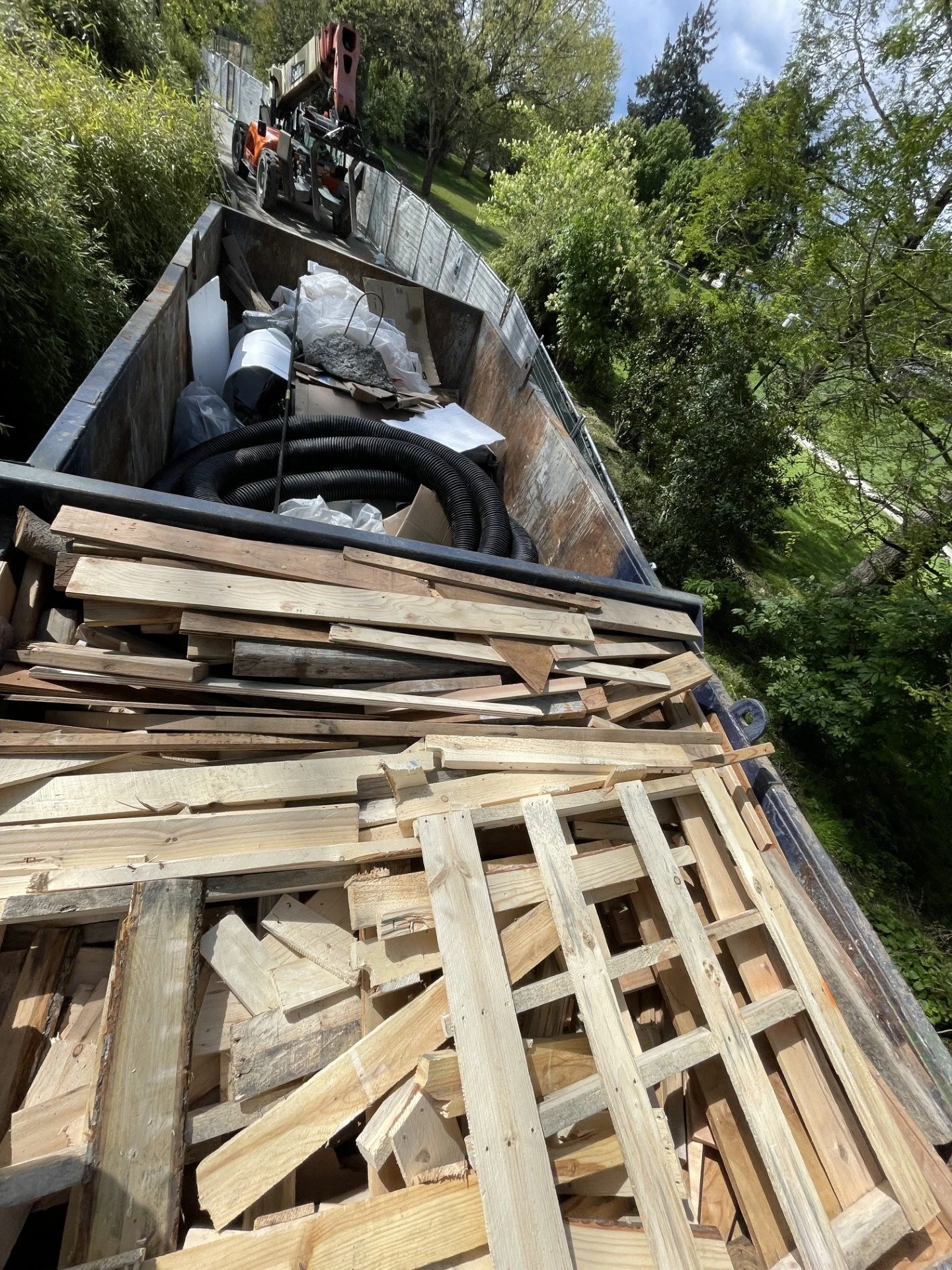
Recognizing the problem couldn’t be solved with comingled loads alone, we worked with ReNu to find a solution that would increase source separation without taking up extra room, especially at space-restricted sites. As a result, ReNu developed a prototype for a segregated bin that we piloted on the Woodland Park Zoo Forest Trailhead project. The system not only enabled source separated diversion of 53.7 tons of wood, styrofoam and concrete, it received positive feedback from both site and hauling staff and has since been rolled out on other Sellen sites and ReNu clients.
Beyond Sellen
Recognizing that the waste challenge impacts more than just Sellen, we have worked with our SCL and USGBC networks to connect ReNu with haulers in other regions that were interested in learning about the solution. Our hope is that similar offerings are made possible nationwide and we can continue to develop practical waste management solutions to increase diversion. Successful solutions must be scaled.
Material Circularity & Embodied Carbon Reductions at ASUW Shell House
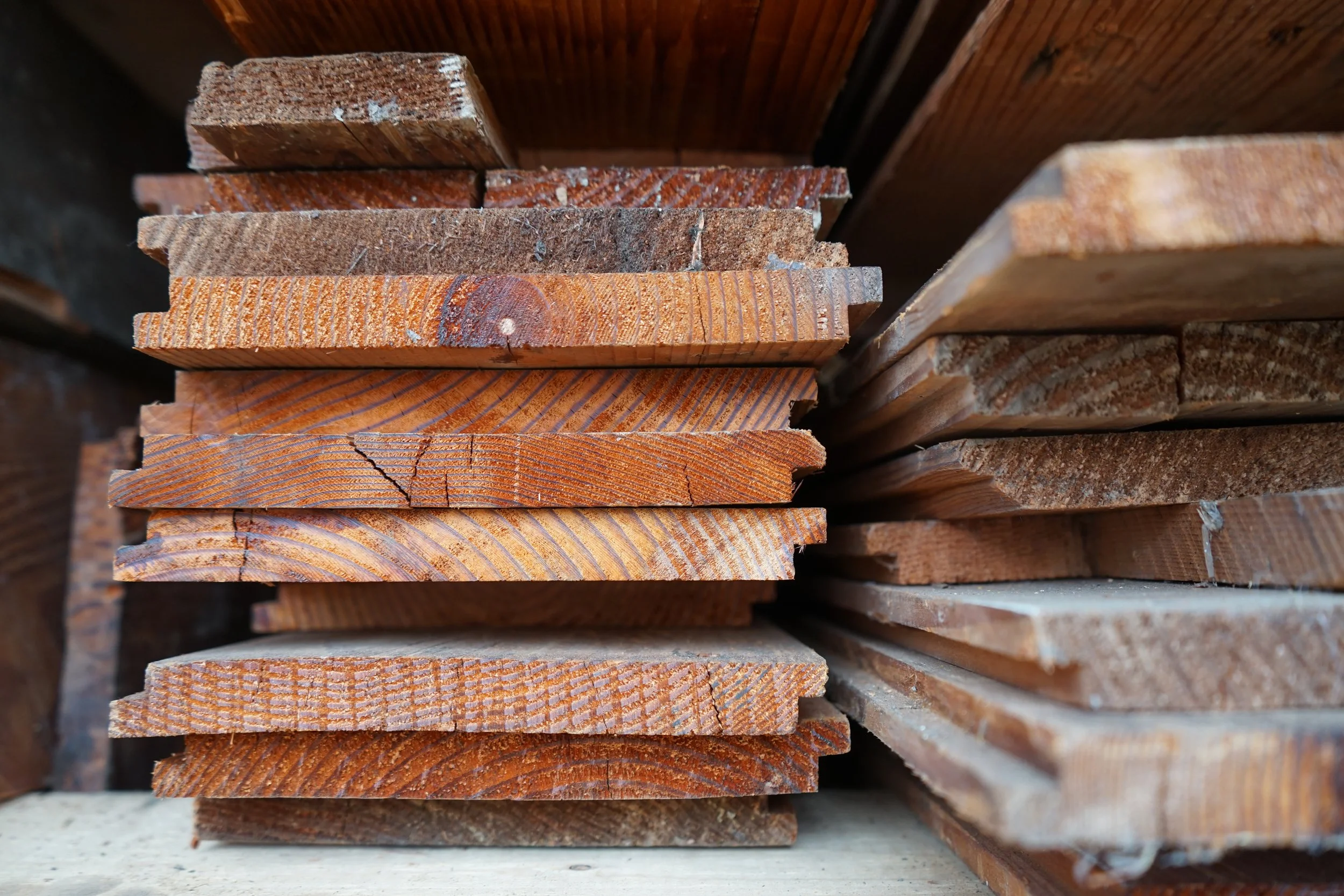
The ASUW Shell House, home of the famous “Boys in the Boat” and an iconic piece of local history, Sellen is balancing heritage preservation with high-performance building standards as the historic renovation pursues LEED Gold certification, including the pilot credit for Reducing Embodied Carbon and documenting two Fitwel credits. The team focused on selective deconstruction and extensive salvage to retain as much of the original materials as possible. Very little non-hazardous waste material is anticipated. The project is slated for completion in late 2026.
An Impactful Reuse Partnership
At the Lakewood BECU, the project team collaborated with Earthwise to salvage 23 cabinets, 1 water heater, 2 water fountains, 1 toilet, and 2 full-lite doors, which kept 1,420 lbs of waste out of landfill and approximately 0.644 metric tons of CO₂e out of the atmosphere.
“Collaborations like this are essential to the circular economy—allowing materials from high-end commercial projects to be reinvested into local homes and businesses. Without forward-thinking contractors like Sellen, much of this material would be lost. Their commitment to reuse makes a real impact.”
Fleet & Equipment Electrification
In 2026, Sellen Construction joined the Breaking Barriers Collaborative (BBC), a Pacific Northwest nonprofit initiative that helps businesses and organizations electrify their vehicle fleets faster and cost-effectively. Through BBC's hands-on, cohort-based programs, participants gain access to fleet electrification experts, peer networking, and structured planning support to help turn a company's electrification goals into an actionable, phased roadmap. For Sellen, joining the cohort was an opportunity to build a data-driven transition plan for our own fleet while learning alongside other Pacific Northwest companies tackling the same challenges.
-
Sellen's fleet currently totals 24 vehicles across three locations: our Warehouse (7 vehicles, including extra-heavy tractors, medium-duty trucks, and a service van), our Main Office (2 hybrid passenger cars), and our take-home fleet (15 vehicles, including light-duty trucks and service vans). Participation in the BBC cohort provided valuable knowledge-sharing and industry perspective.
-
The analysis we undertook surfaced both challenges and encouraging opportunities. Variability of charging locations across active jobsites, upfront infrastructure costs, a still-limited market for cost-competitive medium- and heavy-duty EVs, and current construction market conditions all currently present real challenges. However, several opportunities were daylighted, including that light-duty and passenger vehicles are already cost-competitive to electrify provided replacements align with each vehicle's expected service life, charging infrastructure is currently adequate at both our Warehouse and Main Office. We also conducted a high-level review of our off-road equipment and identified multiple opportunities for continued cost-effective electrification.
-
Sellen's phase-in plan prioritizes light-duty vehicles, which offer the greatest near-term potential for cost-effective electrification, beginning with replacements each year from 2026–2027 and continuing in stages through a final replacement in 2035. Our six medium- and heavy-duty vehicles will follow a longer timeline, starting with two replacements in 2027 and continuing through a final replacement in 2038, as the market for cost-competitive options in this class continues to mature. Supporting initiatives and investigations are already underway, including a feasibility study for additional high-speed chargers at our Warehouse and governance discussions concerning take-home vehicle infrastructure and reimbursement. We are also considering pursuing funding support through the Washington State Zero-Emission Incentive Program (WAZIP) and other federal and state incentives, extending this analysis to our Tapps Electric, Heating & Air fleet, and formalizing an electrification strategy for our job-site equipment.
Priorities for the remainder of 2026 and into 2027 will be to finalize our Fleet & Equipment Electrification Plan as well as to formalize a comprehensive Decarbonization Plan with critical initiatives towards meaningful decarbonization identified.
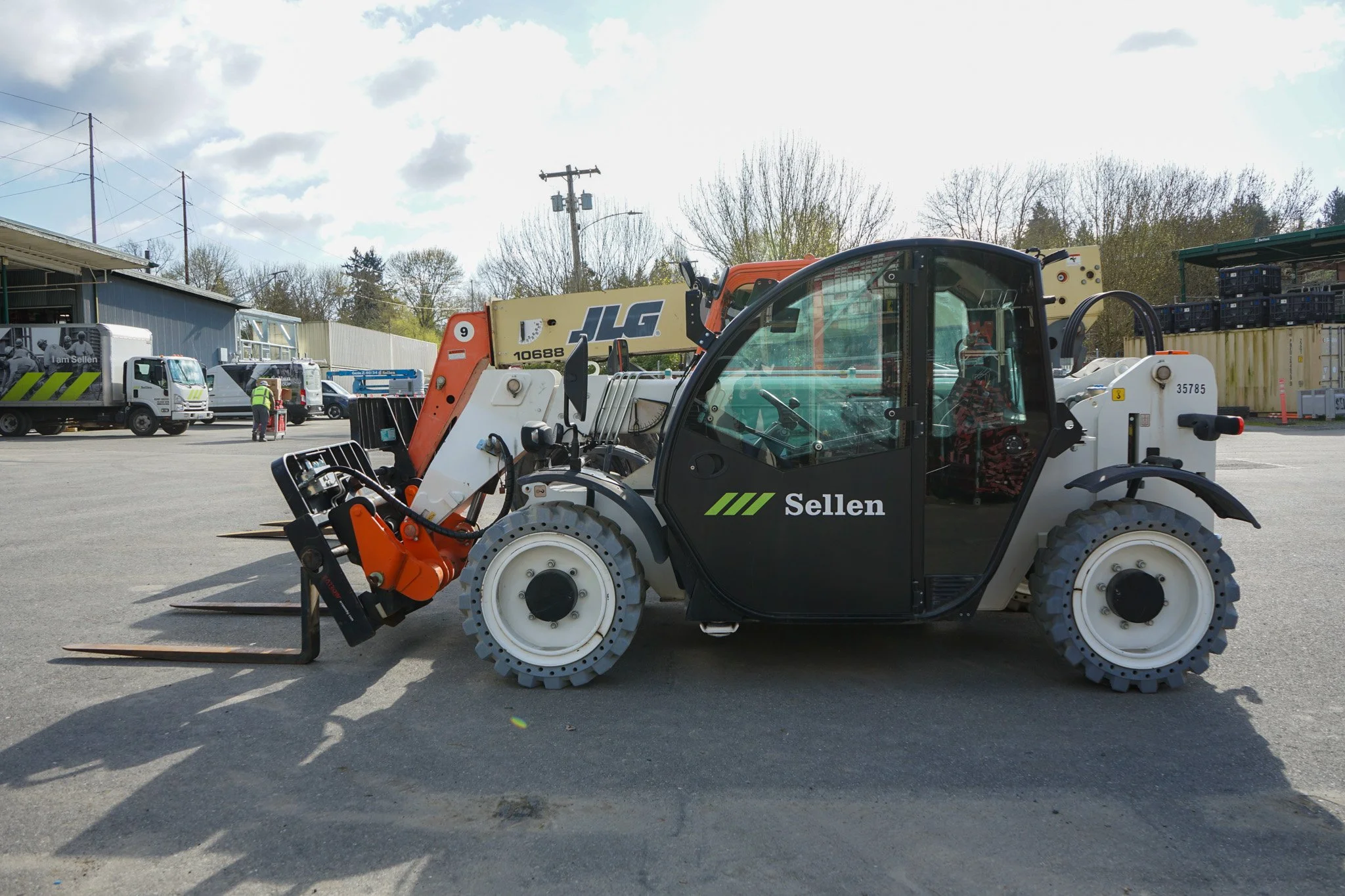
Electric Forklifts
One of the first major pieces of viable electric equipment, both for performance and cost-efficacy, we have been using these for over five years.
Electric Motor Screeds
Our self-perform team trialed one of these at a recent project site, and the foreman provided positive feedback. These have been identified for procurement as existing equipment comes to end-of-life.
Low Carbon Material Solutions
Did you know 40-60% of a project’s whole life carbon emissions are spent before the space is occupied? Although many decisions are made in design, Sellen has long recognized opportunities to realize positive impact through innovative construction practices, engaging in industry collaborations, and pursuit of aspirational projects.
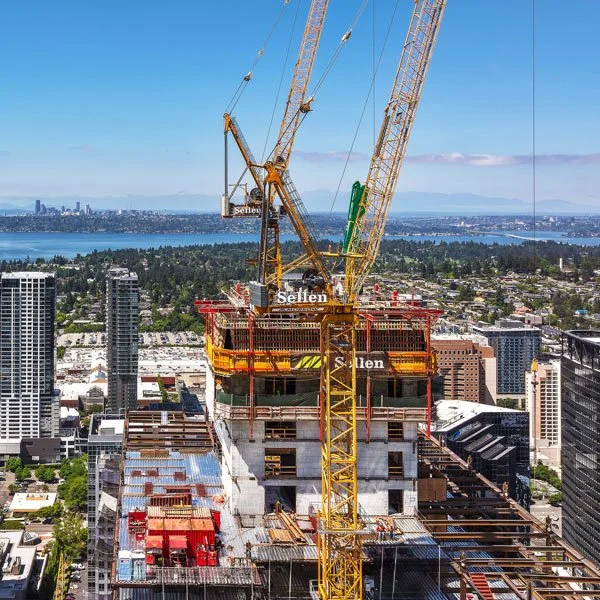
Innovative Practices at Bellevue 600
Sustainability has been a major focus of the Bellevue 600 project, including pursuing exemplary levels of project certifications - Salmon-Safe, LEED Platinum, Zero Carbon - with a focus on reducing both embodied and operational carbon emissions. Extensive collaboration between our team, subcontractors, and suppliers has been crucial to meet the aggressive targets established for the project, particularly for structural materials. As a result, we achieved over 60% carbon emissions reductions in the large urban mat pour. Our team also collaborated with the Lower-Carbon Concrete Task Force to test a new low carbon near-zero Portland cement. The innovative concrete mix uses sulfated granulated blast furnace slag (GBFS) that replaces the typical Portland cement. We used the product in several column encasements and provided site access for periodic strength testing, the results of which were published in a publicly available white paper.
Offset
After exhausting all other avenues to reduce our carbon emissions, we will purchase offsets for any remaining emissions. When the time comes, we will look to invest in a diverse offset portfolio that holistically addresses climate change both locally and globally.
Project Highlights
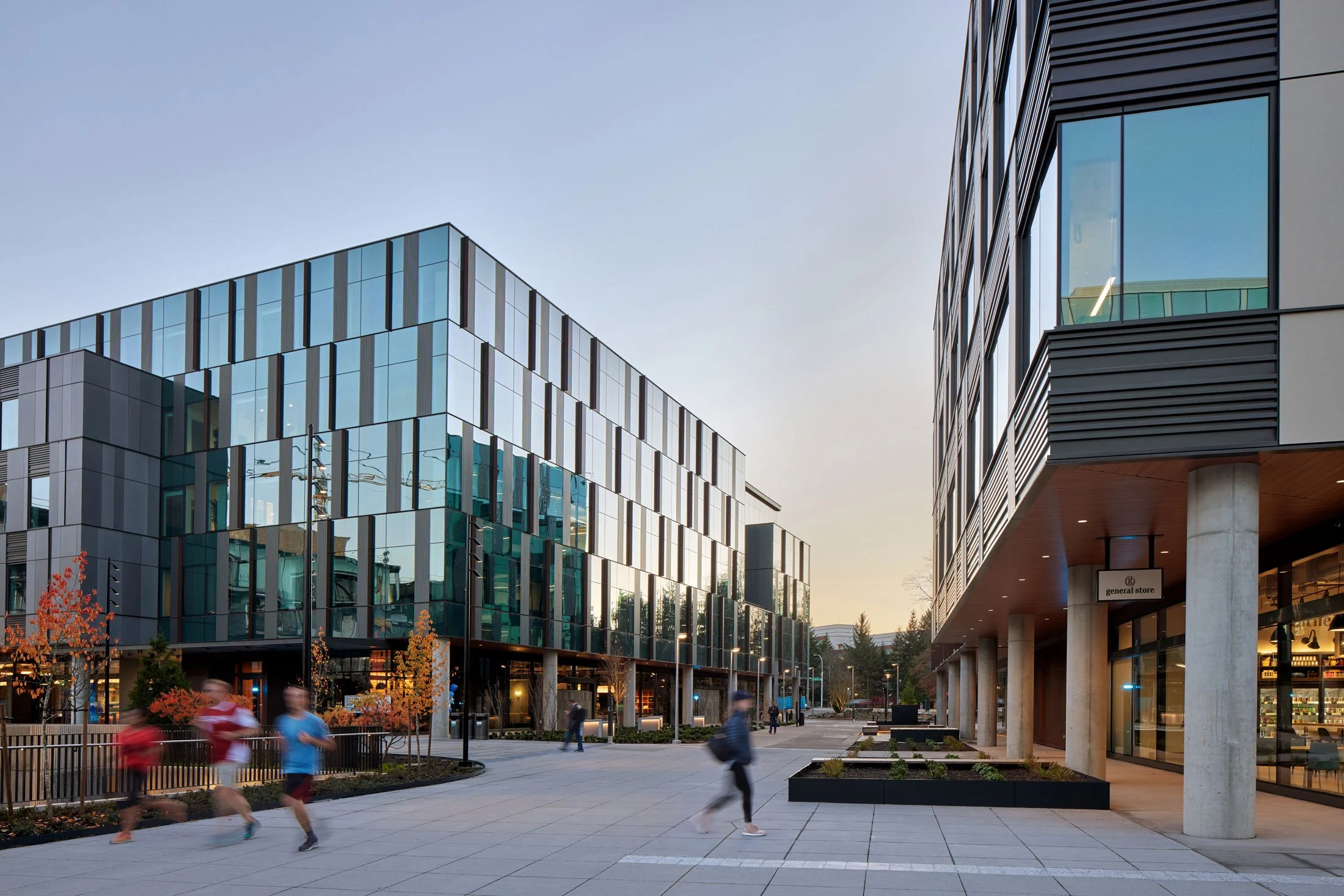
Microsoft East Campus Modernization
Washington Village, Sellen’s portion of this transformative campus modernization project in Redmond, encompassed 782,000 SF across five new buildings. Extensive carbon emission modeling and tracking was undertaken, which has informed our companywide efforts to define carbon intensity metrics for construction phase emissions and will inform future intensity metrics for construction materials.
Key Stats
- LEED Platinum
- International Living Future Institute (ILFI) Zero Carbon Certified
- 100% Electric
- Salmon-Safe Certified
Awards
- 2024 ULI Americas Award for Excellence – Low Carbon Development
- 2024 CREDA Washington State (formerly NAIOP Washington State) Night of the Stars Award – Sustainable Development of the Year
- 2026 Living Future Awards – Building Impact Climate Award
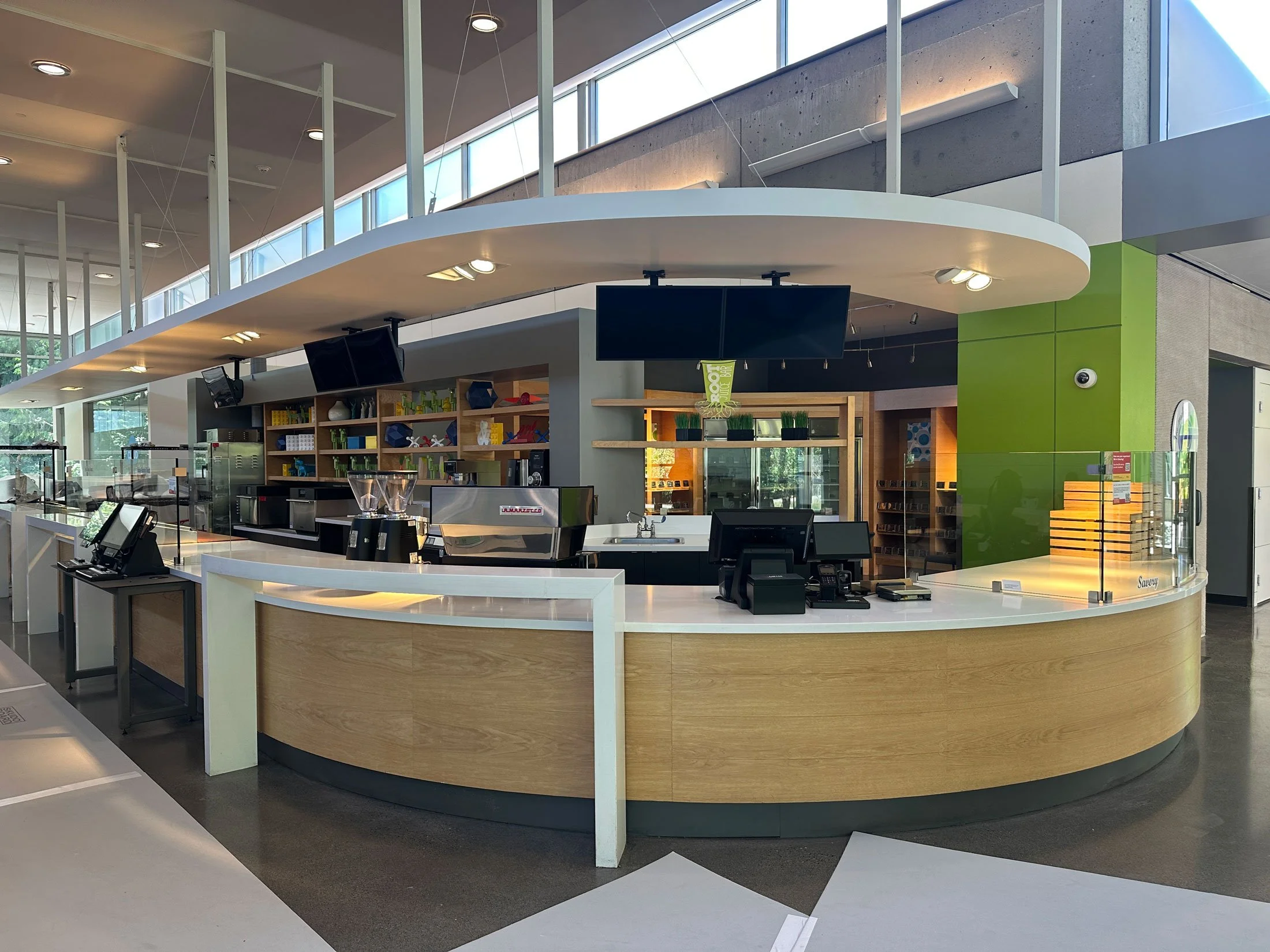
Microsoft Commercial Kitchen Electrification
Delivered by Sellen, Café 25 was the first café on Microsoft’s Redmond campus to complete electrification conversion.
Key Stats
- Part of a broader initiative to transition all commercial kitchen infrastructure from gas to electric, supporting Microsoft’s decarbonization goals
- Marks an important step toward reducing emissions while continuing to provide great dining experiences for employees and guests
- Sellen has converted Cafés 25, 34, and 83 as of July 2026
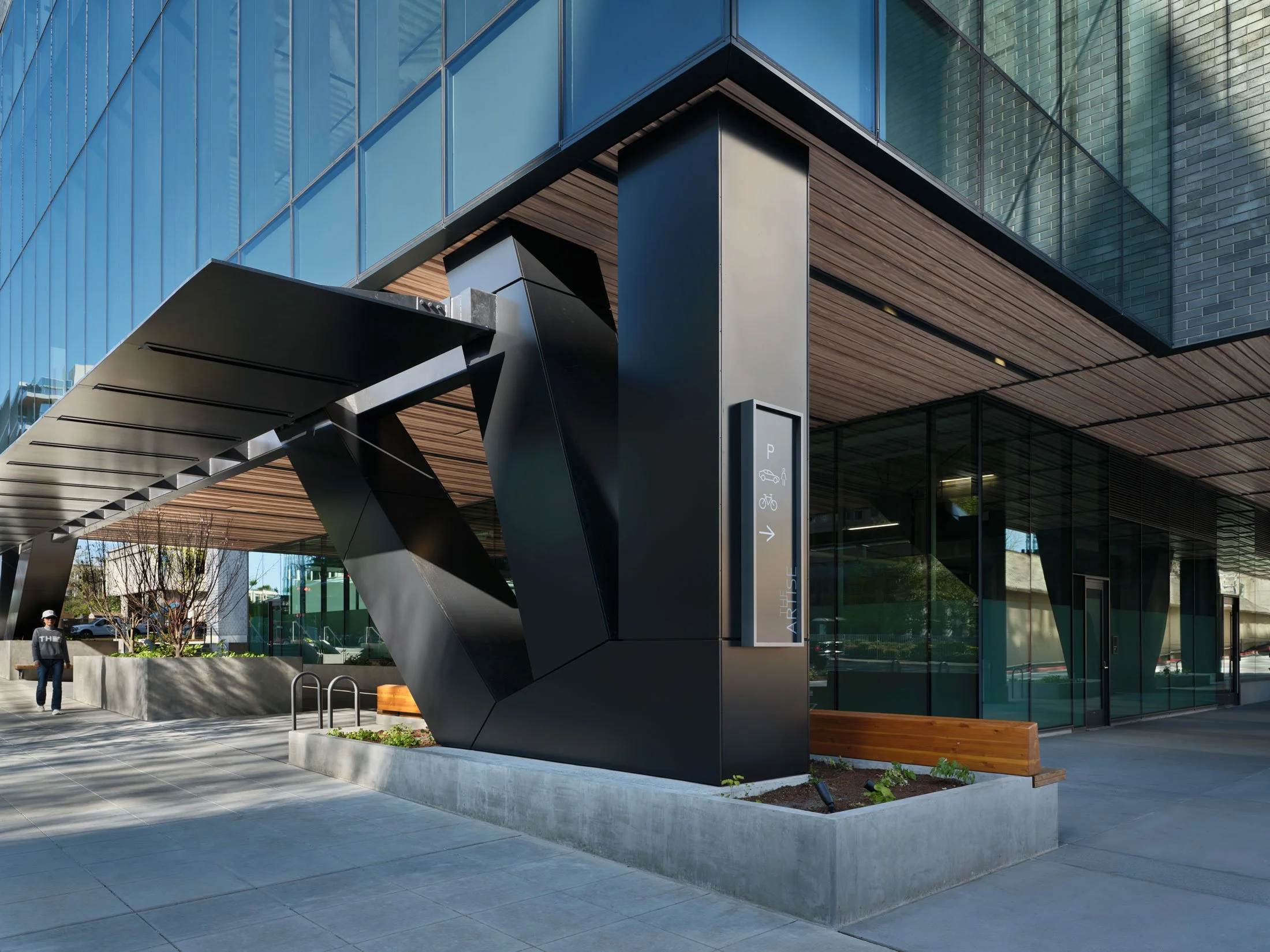
The Artise
Completed in 2024, this 25-story Class A office tower in downtown Bellevue provided an opportunity to implement sustainable strategies and reduce whole-life carbon. While preserving an aquifer and limiting carbon-intensive excavation, the efficient structure also eliminated 3,120 MTCO₂e — equivalent to taking 725 cars off the road for a year.
Key Stats
- LEED Gold
- 2,250 tons of steel saved through structural optimization
- 30% operational energy reduction due to high-performance design
Award
- 2025 Seattle 2030 Leadership Vision Award – Embodied Carbon
03: INDUSTRY UPDATES
Industry Updates
Beyond Sellen’s projects, our participation on the USGBC LEED v5 Design + Consensus Committee, LEED Steering Committee, the Contractor's Commitment Advisory Board, and the Sustainable Construction Leaders (SCL) Advisory Board keeps us on the forefront of where the industry is heading next.
LEED v5
A Bigger Seat at the Table for General Contractors
LEED v5 is the most significant revision to the rating system in over a decade. In BD+C and ID+C, it formalizes something we have advocated for years: a greater role for the general contractor in the LEED process, particularly from a decision-making and collaboration perspective. Contractors belong in the room from concept and schematic design, not after the design is finalized. LEED v5 materially expands the general contractor's technical scope and potential for impact.
Both impact prioritization and technical scope shift in v5. Consolidating dozens of prior impact categories into three weighted focus areas—Decarbonization (50%), Quality of Life (25%), and Ecological Conservation (25%)—v5 provides a clear, carbon-forward direction that carries through to contractor-relevant credits.
The focus on decarbonization is evident in three new credits: IPp3 (Carbon Assessment), MRp2 (Quantify & Assess Embodied Carbon), and MRc2 (Reduce Embodied Carbon). Together they build industry familiarity with embodied carbon metrics and documentation and drive the conversation toward increased decarbonization at scale. These new credits progress from quantification and analysis to reduction, building on knowledge and realized reduction for greater point achievement. Through an EPD-based analysis of A1–A3 embodied carbon quantification of structure, enclosure, and hardscape, all teams will gain a minimum level of exposure to the process. And, with up to two points available for tracking of GC- and subcontractor-controlled construction-activity (A5) emissions, a new awareness of the impact of sourcing and procurement decisions will be gleaned.
Whole-life carbon considerations extend further with MRc1 (Building & Materials Reuse), now a standalone credit, MRc4 (Building Product Selection & Procurement), which rewards circularity by weighting salvaged materials at 200%, and MRc5 (C&D Waste Diversion), which tightens further by defaulting non third-party verified comingled facilities to a 35% diversion rate and requires additional source separation. We are optimistic the new v5 requirements will both educate the industry and transition it to a more inclusive, holistic carbon conversation.
Sellen is ready to absorb this shift rather than react to it. We have been doing carbon analyses, materials reuse, and early collaboration for over a decade. Our in-house sustainability team not only oversees the LEED certification process, but also undertakes EC3 embodied carbon analysis, EPD and materials review, WBLCA modeling, and A4/A5 tracking at full project scale, meaning teams working with Sellen aren't starting v5 from zero. Sellen's early design-assist engagement paired with a collaborative mindset positions us to not just contribute to the process, but to lead teams toward successful certification.
Contractor's Commitment v3
A Framework for Every Stage of the Journey
The Contractor's Commitment (CC) program is currently in active development on its next major update, CC v3, as signatory general contractors and subcontractors work together to refine the framework's Pillars, achievement tiers, and reporting structure for the years ahead.
A key milestone in this process will be a public comment period anticipated for early Q3 2026—the first time CC has formally opened development to a broader audience beyond its signatory base. This step reflects the program's commitment to transparency and to building a framework shaped by input from across the industry, not just those already at the table.
At the heart of v3 is a dual goal: make the framework more accessible at the entry point, while raising the bar at the top. A new "Reported" tier is being introduced below the existing Good, Better, and Best levels, designed to lower the barrier to entry for companies considering signatory status or those in their first few years of reporting. At the same time, the upper tiers are being made more ambitious, ensuring that even the most advanced signatories continue to have meaningful room to grow. The result is a framework that meets contractors wherever they are on their sustainability journey, while always offering a clear next step forward.
Each tier is being aligned with a corresponding goal that reflects this progression: “Reported” centers on organizing internal data and practices, “Good” on taking initial action, “Better” on effective implementation, and “Best” on achieving improved, measurable outcomes. Whether a company is just beginning to formalize its reporting or is already a program leader, CC v3 offers a credible pathway to the next level of commitment.
CC v3 also addresses requirements at both the company and project level within each tier and incorporates built-in optionality across Pillars and tiers, giving signatories flexibility in how they meet requirements based on their size, scope, and existing practices. To further ease administrative burden, v3 introduces Alternate Compliance Paths (ACPs) for companies already reporting through established frameworks such as EcoVadis, CDP, SBTi, B Corp, or JUST, allowing existing disclosures to count toward CC requirements where appropriate.
Together, these changes are designed to make CC both more welcoming and more ambitious, broadening participation without diluting rigor. As development continues, signatories remain focused on building a framework that reflects real-world jobsite conditions and pushes the industry, at every tier, toward continuous improvement.
Sellen remains proud to be part of this effort as a signatory. What began as an idea just seven years ago, with only 12 founding signatories, has grown into a program with nearly 30 signatories nationwide—a testament to the industry's genuine appetite for shared, meaningful standards. We're excited to continue contributing to CC's evolution and to see where v3 takes the program next.

WA CBPS/Seattle BEPS
From Design Intent to As-built Performance
Since our last Sustainability Report, project teams continued to advance Sellen's sustainability goals in the arena of MEPF for both new and existing building projects across Seattle, while also strengthening the processes behind that work.
Major focus has been placed on standardizing our MEPF and Commissioning RFP templates to provide design-assist partners and trade contractors a consistent baseline for scope, coordination responsibilities, and pricing from the start of a project. This effort aimed to reduce gaps in commissioning scope and owner expectations before they reach the field while also ensuring sustainability-related scope isn't lost in the process between design intent and trade execution. Benefits of the improved processes rippled into the field, where coordination with mechanical, electrical, and controls partners increasingly centered on metering, alarm detection, and HVAC sequence optimization ahead of functional testing, helping ensure systems perform as designed rather than simply as specified. Project teams also continued supporting owners through Washington's CBPS compliance deadlines and Seattle BEPS pathway planning, working through benchmarking, energy management plans, and decarbonization strategies catered to each individual building. By connecting sustainability goals with real building conditions, standardized processes, and detailed commissioning coordination, our MEPF teams helped projects achieve design-intended performance through practical field execution.
Looking Ahead
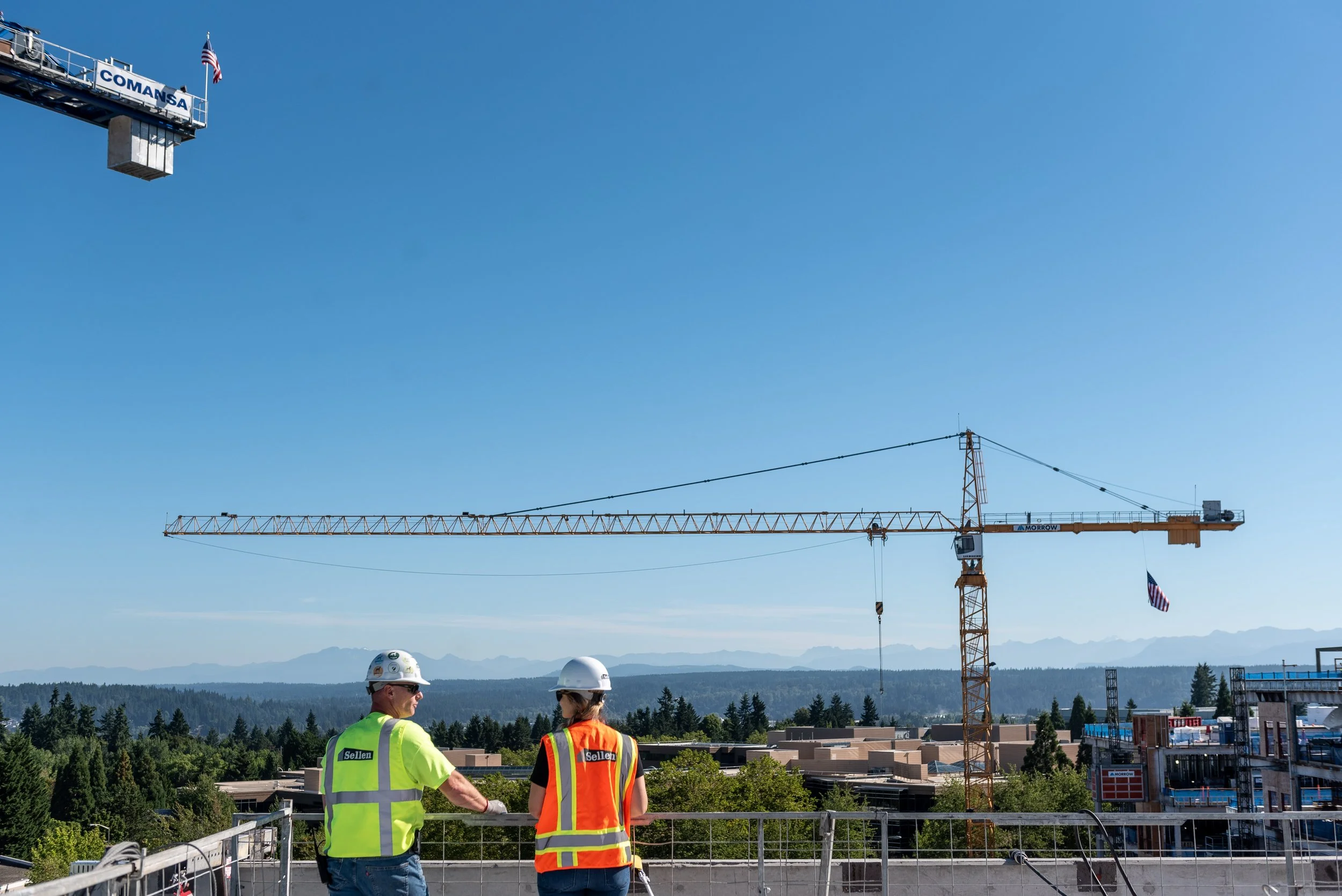
In addition to the continual improvement identified above and internal initiatives that will be included in our Decarbonization Plan, we are acutely aware that Sellen does not operate in a vacuum. We cannot achieve net zero carbon on our own. We will need to collaborate with our partners in the construction industry so we can together push for progress. Over the coming years, in addition to continued supplier engagement with respect to construction materials, we will identify key impact areas and scopes in our supply chain with whom to engage. It is encouraging that some of our most familiar tools like LEED, Contractor’s Commitment, building codes and regional legislation are all contributing to a push for progress, transparency, and accountability. Sellen intends to remain a leader that pushes the industry to recognize what can be done well, on budget, and on schedule whilst promoting regeneration, resiliency and equity.